
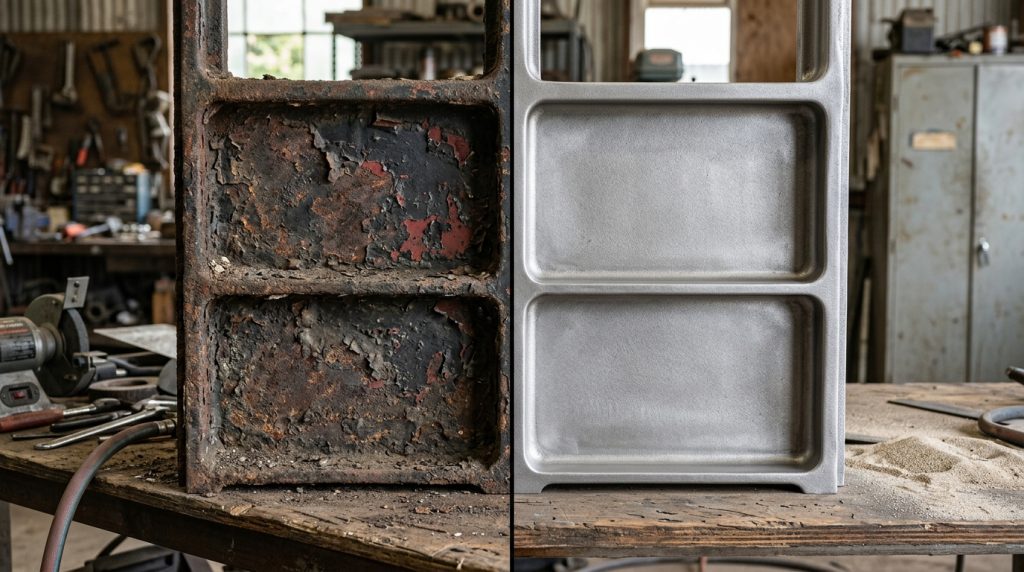
Restoration projects, especially those involving vintage vehicles or delicate metalwork, are often challenged by the problem of rust. Traditional sandblasting can strip away rust effectively but risks damaging the underlying metal. Thanks to advancements in sandblasting techniques, particularly the method known as wet sandblasting, professionals and enthusiasts alike now have the ability to achieve rust removal without compromising the integrity of the base metal. This innovative method not only cools the metal during the blasting process, but it also integrates various media types designed to minimize damage, making it an essential technique for sensitive applications.
Understanding Wet Sandblasting Techniques
Wet sandblasting, which is also referred to as vapor blasting or dustless blasting, utilizes a high-pressure water stream combined with abrasive media to effectively remove rust and contaminants. One of the key benefits of this technique is its ability to reduce friction heat significantly, thereby preventing thermal deformation that can occur in traditional dry sandblasting methods. This makes wet sandblasting particularly well-suited for thin or delicate sheet metals.
The Mechanics of Wet Sandblasting
In this process, water acts not only as a lubricant but also as a cooling agent, dissipating heat generated from the kinetic energy of abrasive impacts. Traditional dry blasting can cause localized heating exceeding 250°F, which can warp metal surfaces. In contrast, wet sandblasting maintains a stable temperature, typically keeping the substrate below 120°F. This temperature management is critical for materials such as automotive panels, HVAC components, or any thin-gauge metals that are susceptible to warping.
Comparison with Dry Sandblasting
Understanding the difference between wet and dry sandblasting is essential for making informed choices about rust removal. While dry sandblasting employs only abrasives to remove contaminants, wet blasting includes water to minimize the dust created during the process. This dust suppression is vital for keeping work areas clean and safe, as it reduces airborne particles by up to 92%. Given the health risks associated with inhaling silica dust, wet sandblasting not only protects the metal but also enhances workplace safety.
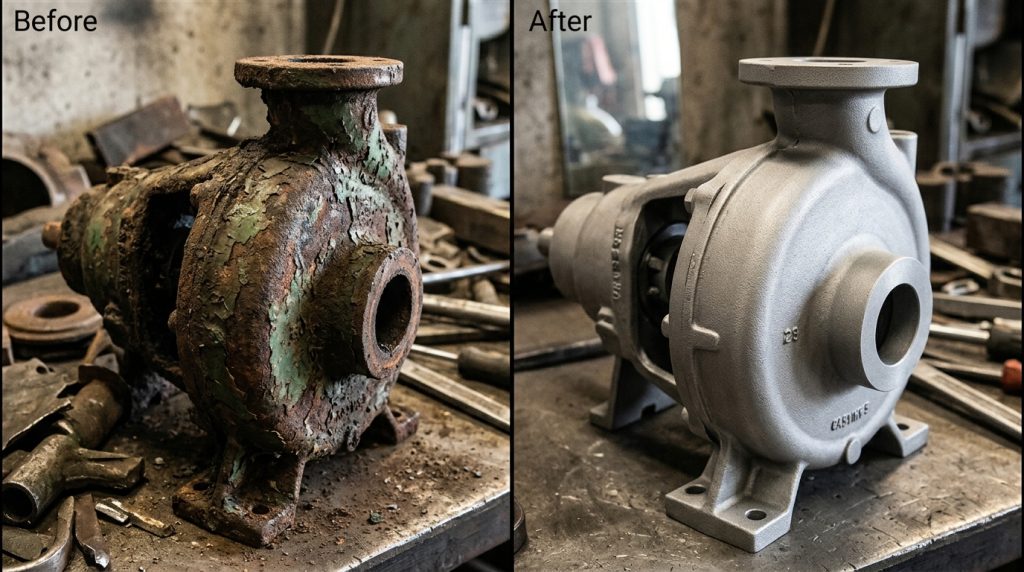
Choosing the Right Abrasive Media
The effectiveness of rust removal through wet sandblasting is heavily influenced by the choice of abrasive media. Various types of media have unique characteristics that can be strategically selected based on the specific needs of the substrate material and the severity of rust.
Media Types and Their Applications
Here is a brief overview of different media types used in wet sandblasting:
- Baking Soda: This soft abrasive is ideal for delicate surfaces, as it can effectively remove light rust without etching the metal. It works well on thin automotive panels and antique elements.
- Crushed Glass: Renowned for its sharp, angular particles, crushed glass is effective for medium to heavy rust. When used with fine grits, it reduces the chances of warping.
- Walnut Shells: An organic option, walnut shells provide a gentler touch, making them excellent for fiberglass and intricate components.
- Aluminum Oxide: Particularly effective for serious rust, aluminum oxide is one of the hardest abrasives available but should be used cautiously on thinner metals to prevent damage.
- Plastic Abrasives: Engineered specifically for delicate applications, plastic media allows for precision work and minimizes the risk of substrate damage.
- Glass Beads: Known for their peening effect, glass beads can smooth surfaces without aggressive cutting, providing a uniform finish ideal for cosmetic components.
Equipment Specifications for Effective Results
To achieve optimal results in wet sandblasting, the choice of equipment is nearly as important as the method and media used. Properly calibrated tools ensure efficiency and minimize the risk of damages during the blasting process.
Pressure Washer Requirements
For successful wet sandblasting, a gas-powered pressure washer delivering between 3,000 and 4,000 PSI with a flow rate of at least 4 gallons per minute (GPM) is recommended. The PSI indicates the force used to remove rust, while the GPM ensures that adequate cooling and media transport occurs during operation. Electric models may not provide the necessary sustained flow, making gas-powered units preferable for larger jobs.
Choosing the Right Nozzle
Nozzles play a critical role in controlling the flow of abrasive media, and the choice of nozzle can significantly affect performance. Tungsten carbide nozzles tend to outlast ceramic nozzles, and their precision helps maintain consistent performance throughout the job. Opting for a nozzle that matches your pressure washer’s specifications is essential; an incorrect size can create back pressure or insufficient velocity, both of which can lead to subpar results.
The Sign Autobody Repair restores worn metal surfaces with expert sandblasting, ensuring durable, precise, and fleet-ready results every time.