For most systems, source removal under continuous negative pressure offers the strongest foundation. Technicians contain the ductwork, apply suitable duct agitation, and use vacuum collection to draw loosened material into filtered equipment. The best method still depends on duct material, contamination, access, and equipment setup. A powerful vacuum cannot compensate for an unsuitable brush, while agitation without containment may redistribute dust. Understanding those differences helps property owners assess proposals and protect their ventilation system.
Negative Pressure and Source Removal for Vent Cleaning
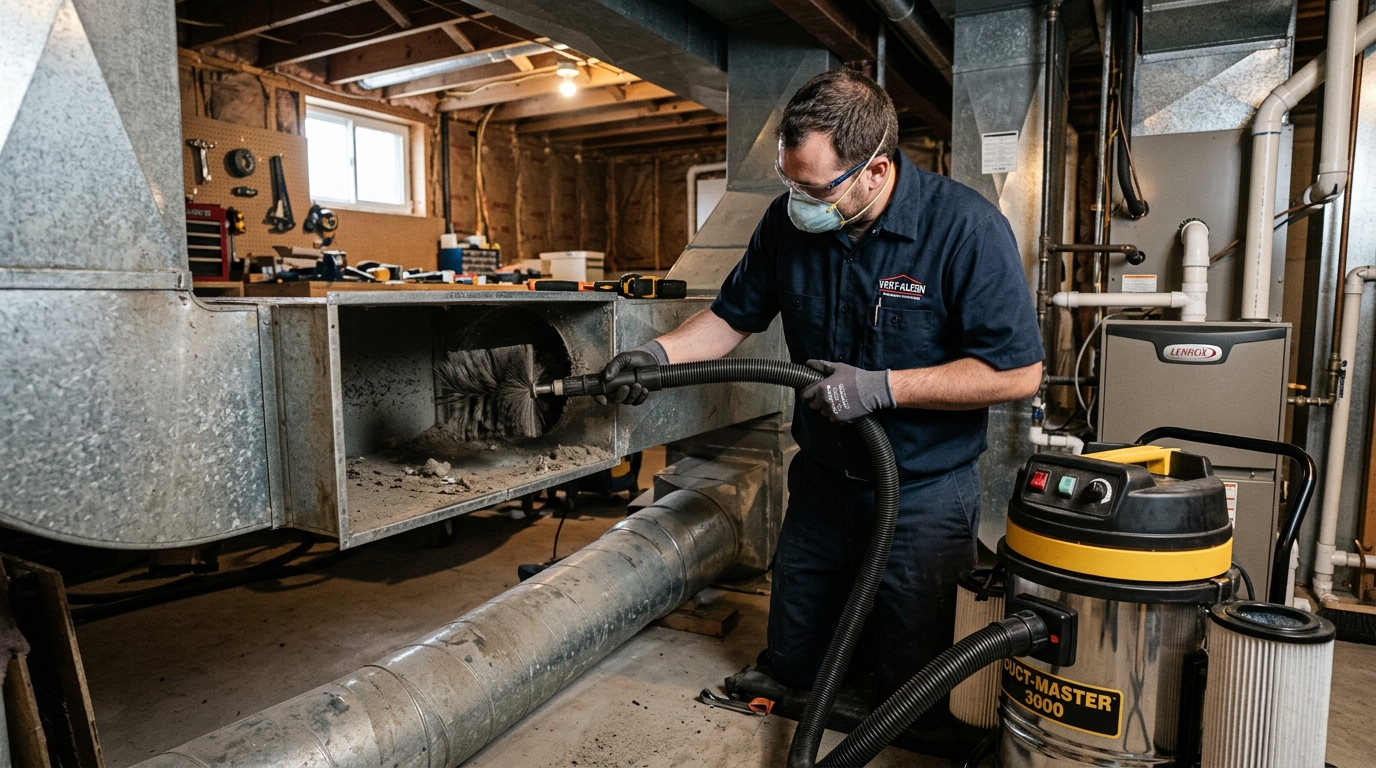
Negative pressure creates a controlled inward airflow that directs debris toward a collection unit. Technicians connect a vacuum to the duct system, seal access points, and maintain suction while cleaning each section. HEPA filtration helps capture fine particles rather than releasing them back into occupied rooms.
Vacuum power alone does not dislodge material stuck to duct surfaces. Brushes, air whips, or compressed air loosen buildup, while suction carries it away. This combination defines professional source removal and forms the basis for comparing common duct cleaning methods.
Containment During Mechanical Agitation
Continuous suction matters most while tools disturb dust. If airflow weakens or seals leak, particles can escape through registers or move into other branches. A provider should explain how the system maintains containment throughout the job.
Ask about the vacuum connection, filtration, protection for HVAC components, and inspection after cleaning. These details reveal more than a machine’s advertised airflow rating.
Cleaning Methods for Different Duct Materials
Duct construction determines how much contact or pressure a surface can tolerate. Sheet metal generally withstands firmer tools, while flexible ducts and fiberglass liners need gentler handling.
| Method | Best fit | Main consideration |
|---|---|---|
| Agitation with negative pressure | Whole-system cleaning | Keep suction continuous |
| Truck-mounted source removal | Heavy debris in rigid ducts | Control force on fragile sections |
| Rotary brush cleaning | Stuck buildup in metal ducts | Avoid delicate liners |
| Compressed air cleaning | Loose dust and mixed systems | Pair with strong collection |
| Chemical or wet treatment | Verified, limited contamination | Never substitute for debris removal |
Brushes and Air-Based Tools
Rotary brush cleaning directly scrubs adhered debris from durable duct surfaces. Many systems operate around 300–1,200 revolutions per minute, but speed does not guarantee safe results. A stiff brush can tear flexible liners or damage fiberglass insulation.
Compressed air cleaning uses whips or nozzles to loosen material without hard surface contact. Technicians still need negative pressure and adequate collection; otherwise, air simply stirs particles. Air tools often suit delicate or mixed ductwork better than aggressive brushing.
Truck-mounted equipment can provide substantial airflow for heavy renovation debris. Figures around 10,000–12,000 CFM describe some units, not guaranteed airflow at every duct connection. Distance, hose layout, access, and agitation affect performance.
Material-Specific Decisions and Treatment Limits
Before choosing tools, technicians should inspect accessible ducts, the air handler, and visible contamination. That inspection identifies construction materials and distinguishes loose dust from moisture damage or biological growth.
- Use stronger mechanical contact selectively on sound, rigid sheet metal.
- Choose controlled suction and gentle agitation for flexible duct sections.
- Avoid hard brushing on fiberglass liners that can shed or tear.
- Replace wet or damaged porous lining when cleaning cannot restore it.
Chemical products do not remove dust, so physical cleaning comes first. A qualified contractor should use antimicrobial treatments only for verified conditions, on approved surfaces, and according to product labels. Moisture-sensitive liners often need repair or replacement instead.
Questions That Clarify a Contractor’s Method
Request a clear explanation of the inspection, containment plan, tools, and post-cleaning verification. Before-and-after images can document accessible areas, while visual checks help confirm debris removal. For additional surface-care context, comparisons of protective ceramic coatings and vehicle wrap durability illustrate why material compatibility matters, though ductwork requires specialized HVAC guidance.
Reliable ventilation system maintenance also addresses underlying causes. Leaking joints, moisture sources, or damaged ducts can bring dust and odors back after cleaning. Repairing those problems supports longer-lasting results.
The best approach combines suitable agitation, uninterrupted negative pressure, and effective HEPA filtration. A qualified air duct cleaning professional can inspect the system, match tools to its materials, and recommend repairs when cleaning alone will not solve the problem.