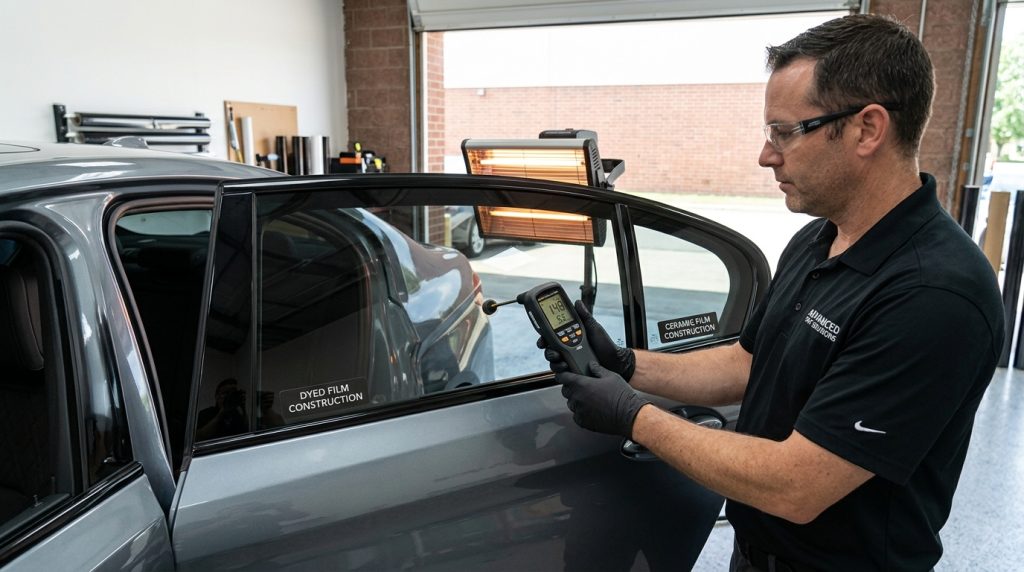
Window tint’s shade reveals little about how its construction manages sunlight. Dyed window film darkens glass by absorbing visible light, while ceramic window film uses microscopic particles to manage solar energy differently. That distinction can shape cabin comfort, visibility, fading, and performance over time.
Film Construction and Solar Energy
Dyed film places color within its layered construction. The dye absorbs visible light and gives windows a darker appearance, which can reduce glare and improve privacy. Some absorbed solar energy becomes heat within the film, so the glass and cabin still influence the final result.
Ceramic film incorporates fine ceramic particles that interact with parts of the solar spectrum. Quality products can limit infrared energy while maintaining useful clarity at lighter shades. This window tint construction can deliver stronger thermal performance without relying only on darkness.
Construction Differences in Practice
Neither category performs identically across every brand or shade. A premium dyed product may outperform a basic film, while a ceramic label alone guarantees no particular result. Compare manufacturer data for the exact film and glass combination.
| Feature | Dyed film | Ceramic film |
|---|---|---|
| Primary construction | Light-absorbing dye | Ceramic particles |
| Heat control | Basic to moderate | Often stronger |
| Color stability | Product dependent | Typically strong |
| Signal compatibility | Non-metallic | Non-metallic |
The table describes general tendencies, not universal guarantees. Product specifications matter more than a broad category label.
Heat Rejection and Solar Measurements
Heat rejection depends on how film and glass handle the full solar spectrum. Dyed products mainly alter visible light and may reduce some incoming energy. Ceramic products can target infrared energy more effectively, which often improves cabin comfort under direct sun.
However, infrared rejection does not tell the whole story. Total solar energy rejection, or TSER, considers a broader range of solar energy. Two films may advertise similar infrared figures yet produce different overall results. Check the test method alongside the number.
When comparing products, use several measurements together. These figures help explain performance rather than simply describing how dark a window looks:
- Visible light transmission, or VLT, indicates how much visible light passes through the glass.
- TSER estimates how much total solar energy the film and glass reject.
- Infrared specifications describe a selected portion of solar radiation, depending on the manufacturer’s test.
- UV protection indicates how effectively the product blocks ultraviolet radiation.
A lighter ceramic shade can sometimes reject more heat than a darker dyed option. VLT and thermal performance describe different characteristics, so neither substitutes for the other.
Durability, Clarity, and Daily Use
Sunlight and heat gradually challenge film color and adhesive. Lower-quality dyed products may fade, shift toward purple, bubble, or peel, although product quality and installation influence outcomes. Ceramic films generally retain their color well, but buyers should review the specific warranty and its terms.
Both dyed and ceramic films avoid the signal concerns associated with some metallic films because neither construction relies on metal. Drivers can still check product details, especially when vehicles depend on GPS, mobile connectivity, or radio reception.
Comfort Without Excessive Darkness
Ceramic technology can support substantial solar control at a relatively light shade. That helps drivers who want daytime comfort without sacrificing as much visibility. Yet very dark windows can hinder night driving, regardless of film construction.
UV protection also deserves separate attention. Many quality films block a high proportion of ultraviolet radiation, but UV performance does not measure total heat rejection. Review both specifications when interior protection and cabin comfort matter.
Choosing Film for Your Vehicle
Climate, parking habits, driving patterns, and intended ownership all affect the decision. Frequent sun exposure can make ceramic’s thermal benefits more valuable. For privacy, glare reduction, and a darker look, dyed film may meet basic needs.
Before selecting automotive window film, verify these details with the installer:
- Request the manufacturer and exact product series.
- Compare VLT, TSER, infrared figures, and UV protection.
- Confirm the warranty coverage and installation process.
- Check local tint laws before choosing a shade.
Ultimately, dyed construction prioritizes appearance and basic light control, while ceramic construction often delivers stronger heat rejection and color stability. A qualified tint professional can compare product data and recommend a legal shade for the vehicle and its driving conditions.