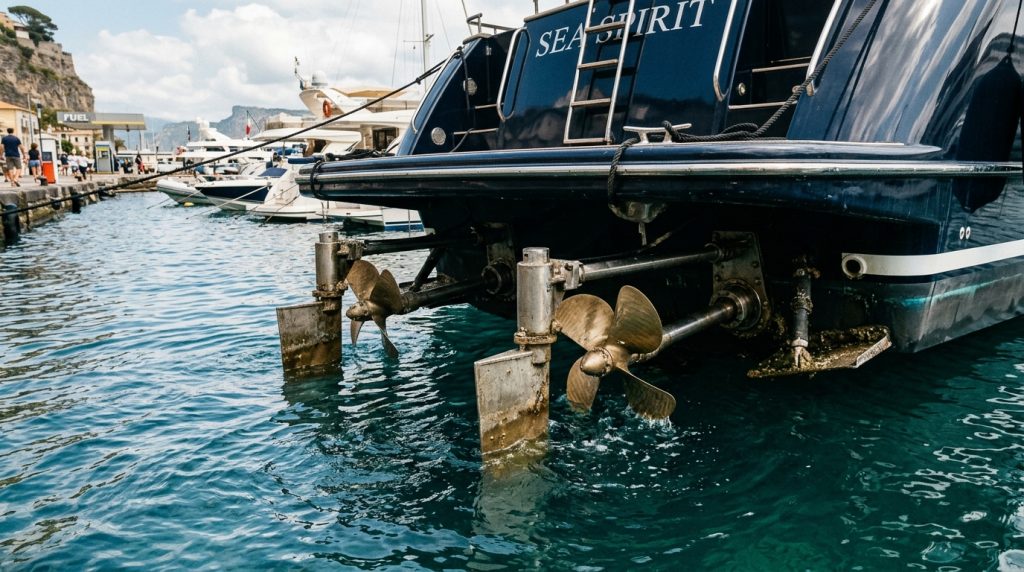
Boat running gear turns engine power into thrust through a tightly connected system of shafts, bearings, seals, struts, and propellers. Each component works in water, under vibration and load, so small changes can affect the entire propulsion system.
Understanding how these parts wear helps owners recognize early warning signs and plan sensible marine maintenance. It also shows why replacing one component without checking its neighbors may leave the original problem unresolved.
Running gear components and their roles
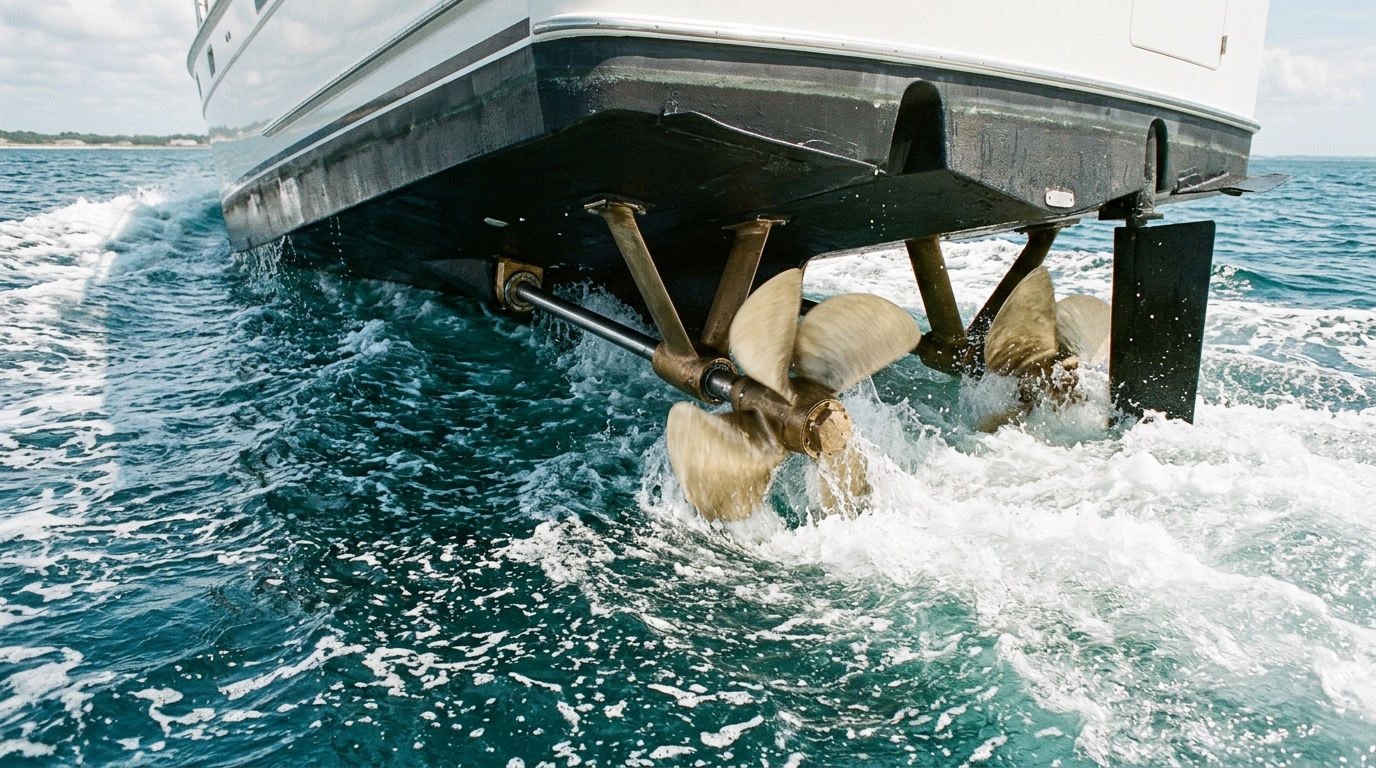
The engine and transmission connect to a shaft coupling, which drives the propeller shaft through the hull. A stuffing box or dripless seal surrounds the shaft at the hull opening and limits water intrusion.
Farther aft, struts support the shaft. Each strut holds a water-lubricated sleeve, commonly called a cutlass bearing, with grooves that carry seawater along its rubber lining.
This bearing supports the rotating shaft while allowing water to provide bearing lubrication. The propeller creates thrust, while the seal protects the vessel where the shaft exits. Together, these parts form a working chain: wear in one area can transfer stress elsewhere.
Cutlass bearing wear and its warning signs
Cutlass bearing wear develops as the rubber lining erodes and clearance around the shaft grows. Sand, silt, marine growth, long storage periods, and misalignment can speed that process.
As clearance increases, the shaft may knock against the bearing and send vibration through the hull. Continued movement can score the shaft, strain the strut, and accelerate shaft seal wear.
During a haul-out, move the shaft gently beside the strut, both vertically and sideways. A little play may occur, but obvious clunks, uneven movement, protruding rubber, or a shifted sleeve deserve inspection.
| Observation | Possible meaning | Recommended response |
|---|---|---|
| Noticeable shaft movement | Worn bearing clearance | Arrange bearing inspection |
| Uneven rubber wear | Possible alignment problem | Check shaft alignment |
| New vibration after impact | Propeller or shaft damage | Inspect before extended use |
| Seal heat or excess leakage | Misalignment or seal wear | Check the seal and shaft |
A diver can sometimes check shaft movement in the water, although bearing replacement usually needs specialized access. The pattern of wear matters as much as the amount: one-sided erosion can point toward misalignment.
Shaft seal wear and water protection
A stuffing box uses packing around the shaft, while a dripless seal relies on sealing faces and a flexible bellows. Both designs manage water at the hull opening, but each needs appropriate inspection.
Excessive dripping, unusual heat, or rapid wear can indicate shaft seal wear. Vibration often worsens the problem because the shaft moves unevenly against the sealing surface.
Owners should follow the seal maker’s guidance rather than assume every design behaves alike. A packing gland may allow controlled dripping underway, while a dripless unit should remain dry under normal operation.
Inspection, alignment, and repair decisions
Vibration offers useful clues, but no single symptom proves marine bearing failure. A bent propeller, fouling, a bent shaft, worn engine mounts, or poor alignment can produce overlapping signs.
Record when vibration starts, including its speed range and whether it occurs in forward, reverse, or both. Then inspect accessible components without reaching near moving machinery.
- Check engine mounts for cracked rubber, loosened nuts, or corrosion.
- Look for fishing line, rope, heavy growth, or visible propeller damage.
- Watch the shaft seal for unusual heat, leakage, or rapid deterioration.
- Keep records of bearing replacement and recurring vibration symptoms.
Technicians check alignment at the coupling with feeler gauges, then adjust engine mounts to bring the coupling faces within specification. They should also assess shaft straightness and propeller condition.
Final alignment deserves a check afloat because hull shape changes between land and water. Loading also affects hull position, so an onshore measurement offers a starting point, not always the final answer.
When a bearing needs replacement, technicians remove the propeller and expose the strut bearing. They inspect the strut, shaft, and sealing surfaces before fitting the new sleeve.
Sudden vibration after a strike calls for prompt professional attention. A qualified marine technician can distinguish bearing wear from propeller damage and restore the complete running system, rather than merely quieting one symptom.