
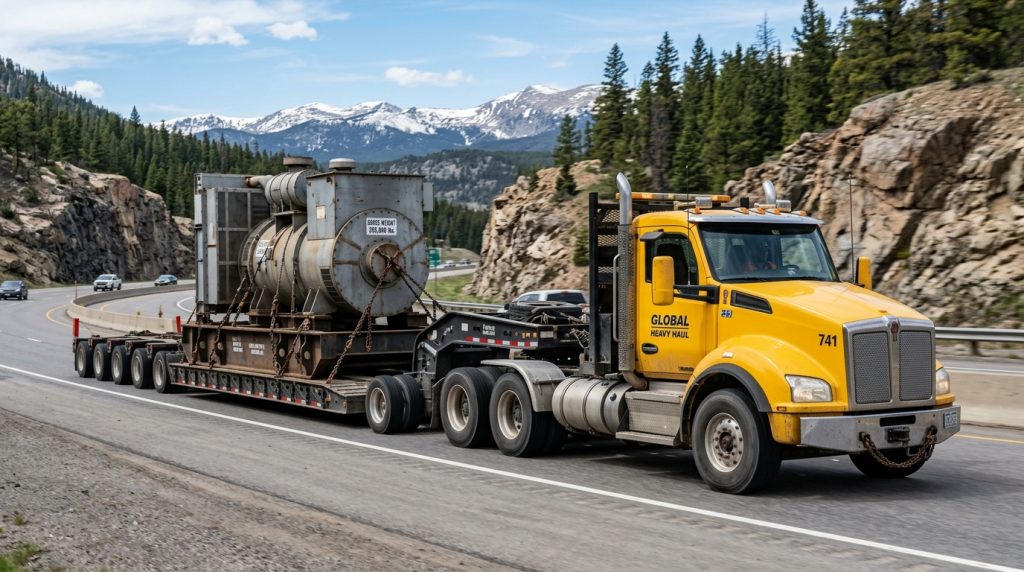
A heavy haul trucking service must match its axle configuration to cargo weight, road conditions, and local rules. The right setup distributes force across the tractor and trailer, protects tires and components, and supports controlled braking. Yet adding axles alone cannot guarantee legal travel or dependable truck stability. Operators must also position cargo carefully, select suitable suspension, and verify axle readings before departure. A trailer carrying dense machinery creates different demands from one carrying evenly spread freight. Likewise, a route with tight turns or weak pavement can change which design works best.
Axle Configurations for Heavy Haul Trucking
An axle layout determines how a vehicle transfers cargo weight to the road. It also affects braking, cornering, tire wear, and compliance with axle load limits.
Tandem and Tridem Axle Setups
Tandem groups use two closely arranged axles and suit many general freight trailers. They balance maneuverability, straightforward maintenance, and usable capacity on established routes. A tridem adds another axle, spreading concentrated loads across more tires and suspension points. Lowbeds and heavy-duty flatbeds often use this arrangement for machinery with uneven contact points.
Multi-Axle Trailer Systems
Quad and larger configurations help carry exceptional loads by reducing stress on each axle and increasing tire contact. However, extra axles add weight, components, and maintenance needs. Wider spacing can reduce tire scrub, while close spacing may improve compactness but increase scrub during turns. Design teams must weigh turning radius, frame strength, suspension geometry, and legal spacing rules together.
Axle count provides only a starting point. The cargo’s center of gravity and placement determine how the tractor’s steer axle, drive group, and trailer axles share the load.
Weight Distribution and Payload Management
Good weight distribution balances axle groups while keeping the load stable. A legal gross vehicle weight does not ensure every axle group stays within its separate limit.
Load Position and Dynamic Forces
Moving cargo forward can increase drive axle loading; shifting it rearward can transfer force toward the trailer axles. Braking moves weight forward, acceleration shifts it rearward, and slopes alter static balance. Uneven ground can also twist the frame and load suspension components unevenly. For these reasons, operators should weigh the complete combination after loading, not rely solely on estimates.
Before dispatch, crews should confirm the following points:
- Check individual axle readings against applicable limits.
- Secure cargo and confirm its center of gravity.
- Adjust cargo position or axle-group placement when permitted.
- Reweigh after changes and document permit conditions.
Axle Spacing and Load Capacity
Spacing affects both road legality and turning behavior. Some jurisdictions use axle-group spacing when calculating permitted loads, so operators must verify the rules for every route segment. In the United States, federal limits commonly include 20,000 pounds for a single axle and 34,000 pounds for a tandem, alongside bridge-formula requirements. State permits, seasonal restrictions, and local rules can change the practical allowance.
Consequently, planners should treat published limits as route-specific requirements, not universal figures. Permits and scale tickets provide stronger guidance than gross weight alone.
Suspension Choices and Truck Stability
Suspension design influences how evenly axle groups carry weight as road surfaces change. Matching suspension behavior to terrain helps protect the chassis and maintain control.
Mechanical and Air Suspension
Mechanical suspension offers a durable, relatively simple choice for rough worksites and demanding off-road service. Air suspension can equalize loads across axles more consistently and reduce vibration. It may also improve ride quality and work alongside ABS or EBS systems. Multi-axle trailers often benefit from careful equalization, though operators still need regular inspections.
Brakes, Alignment, and Frame Strength
Axle beams need ratings that account for dynamic peaks, not just parked loads. Brake selection affects heat management on long descents, while accurate alignment limits irregular tire wear. Frame stiffness must complement suspension movement; excessive mismatch can accelerate fatigue cracks. Regular checks help reveal wear before it compromises handling or reliability.
Route Compliance and Configuration Selection
Route planning connects engineering choices with real operating conditions. A suitable setup must fit the cargo, road network, service capacity, and permit requirements.
For heavy equipment transport, concentrated track or outrigger loads may favor a tridem or quad arrangement. Rough terrain may instead call for reinforced mechanical suspension and robust equalizing beams. Operators should also account for bridge limits, frost restrictions, axle spacing rules, and inspection access. No single configuration serves every shipment.
Before choosing equipment, compare cargo concentration, route surfaces, turning constraints, regional weight regulations, available maintenance support, and required permits. Then have a qualified heavy-haul engineer or transport specialist review the axle plan and scale results. This disciplined check turns capacity into a controlled, road-ready operation.