Professional boat painting is a sequence of carefully controlled steps, not simply a fresh coat applied to a hull. From Boat sanding and surface preparation to primer selection and the final protective finish, each stage helps paint adhere, resist marine exposure and look consistent over time.
Salt water, sunlight, movement and moisture all challenge a boat’s exterior, while existing damage or incompatible coatings can undermine even a skilled application. Understanding how professionals assess the surface, repair defects and build a suitable coating system makes it easier to evaluate the work and ask informed questions before a project begins.
Boat sanding and surface preparation for a lasting finish
The quality of professional boat painting begins with the condition of the substrate. Before choosing a coating, technicians inspect the hull, identify existing paint and gelcoat issues, and determine which preparation methods are appropriate for the material.
Surface preparation and coating assessment
Surface preparation can include washing, degreasing, removing loose or failed paint, and sanding to create a clean, even surface. The method and abrasives depend on the boat’s construction and the condition of its finish; excessive sanding can damage gelcoat or expose underlying layers.
Professionals also check for blisters, cracks, corrosion on metal components, and signs of moisture or poor adhesion. When defects are present, Gelcoat repair or other substrate repairs should be completed before the paint system is applied. A new coat cannot conceal an unstable surface for long.
Boat sanding and dust control
Boat sanding removes surface irregularities and helps prepare sound existing coatings for the next layer. Careful control matters: edges, molded details and repaired areas may need a lighter touch than broad, flat sections, while dust must be removed before priming.
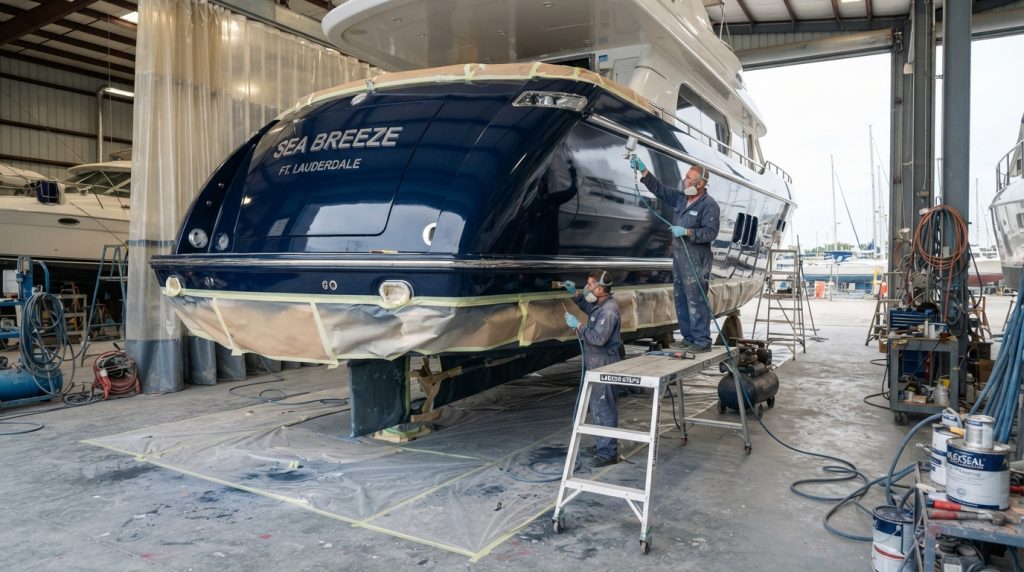
Work areas are typically protected to limit contamination and overspray, and appropriate safety measures help manage dust and coating vapours. The aim is not merely to make the hull look smooth; it is to provide a clean, uniform base that supports reliable adhesion.
Preparation also includes confirming that the selected products are compatible with the substrate and one another. For readers interested in learning more about practical pastimes and choosing activities that suit their interests, this guide to finding a hobby that fits offers a broader perspective on hands-on pursuits, including boat care.
Marine primer selection and application between coats
Once the surface is ready, the primer forms the link between the substrate and the finish system. Product choice depends on the hull material, the condition of existing coatings, the intended paint and whether the boat operates above or below the waterline.
Before discussing application details, it helps to distinguish the roles of common primer systems and the checks that support a consistent result.
Marine primer and antifouling primer compatibility
A Marine primer can promote adhesion, seal a prepared surface or help protect a particular substrate, depending on its formulation. An Antifouling primer is used where the specified system calls for a compatible base beneath antifouling paint; it is not automatically interchangeable with primers intended for topside finishes.
Professionals follow the manufacturer’s instructions for surface requirements, mixing, coverage and recoating intervals. Applying a primer over contamination, or pairing products that are not designed to work together, can lead to peeling, uneven curing or premature failure.
Primer application and inspection
Primer may be applied by brush, roller or spray, depending on the product, the work area and the finish required. Technicians monitor film thickness and drying conditions, then inspect for pinholes, runs and other imperfections before moving to the next stage.
Where sanding between coats is specified, it helps level minor irregularities and prepare the surface for adhesion. The timing matters: a coating applied too soon or after the recommended window may not bond as intended, so the product data sheet guides the sequence.
| Stage | Main purpose | Typical quality check |
|---|---|---|
| Surface preparation | Remove contamination and create a sound base | Clean, dry surface with no loose coating |
| Primer application | Support adhesion and system compatibility | Even coverage and correct recoat timing |
| Hull coating | Provide the specified protective or decorative layer | Consistent film with no visible defects |
| Final inspection | Confirm finish quality and coating continuity | Uniform appearance and properly cured surface |
Primer decisions are especially important where underwater and topside areas meet, because the coating requirements can differ. A clear record of products and application steps helps ensure that later maintenance follows the same compatible system.
Hull coating and professional boat painting finish
With the substrate prepared and primed, the coating stage gives the boat its final appearance and protection. The exact system varies with the area being painted: topside finishes and underwater coatings serve different purposes and must be selected accordingly.
Several application choices shape the result, from the use of spray equipment to environmental controls and curing conditions. Careful planning helps prevent defects that may otherwise become visible only after the coating has dried.
Marine paint application and spray coating
Marine paint application can involve brushing, rolling or Spray coating. Spraying can produce a smooth, even finish over large surfaces, but it requires skilled technique, suitable ventilation and controls to limit overspray and airborne particles.
Temperature, humidity, airflow and surface cleanliness can affect how a coating spreads and cures. Professionals monitor these conditions and apply coats according to the product instructions rather than rushing to cover the hull in a single pass. For those exploring boat maintenance as a leisure interest, this article on selecting a suitable pastime provides general ideas for getting started with activities that reward patience and practical skill.
Because surface condition, materials and coating systems vary, a qualified marine painter can assess the boat and recommend suitable preparation and products. Professional guidance helps align the sanding, priming and coating stages with the vessel’s needs and the manufacturer’s specifications.