
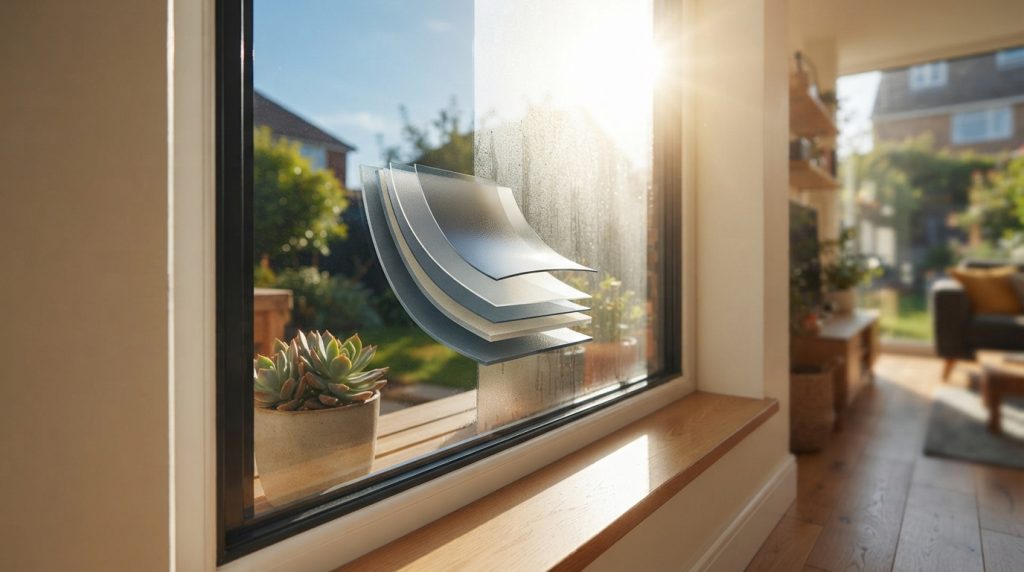
Residential window tinting is often treated as a choice between a bright room and a cooler one. In reality, a film’s layered construction can influence how much solar heat enters, how daylight passes through the glass and how strongly sunlight reflects into the room. Understanding these interactions makes it easier to select a solution that suits both the home and its windows.
A Solar control film does more than darken glass: its materials and coatings can target different parts of the solar spectrum. Heat rejection, Glare reduction and UV protection are related benefits, but they are not interchangeable, and a film that excels in one area may affect the others differently. The right balance depends on window orientation, room use, existing glazing and the amount of natural light occupants want to preserve.
Film layers shape heat and glare control
Window films are made from thin layers that may include a polyester base, colorants, adhesives and reflective or spectrally selective coatings. Together, these components determine how the film transmits, absorbs or reflects incoming solar energy. Their combined effect—not simply the film’s shade—sets its performance.
Solar radiation includes visible light, ultraviolet rays and infrared energy. A film can reduce UV exposure while allowing substantial daylight through, or it can reflect more solar energy to limit heat gain. These outcomes depend on the layer design, so product specifications are more informative than appearance alone.
Two properties help explain how a film will affect a room: the proportion of visible light it allows through and the amount of solar energy it rejects. The following comparison clarifies what each measure can indicate.
| Film property | What it describes | Residential effect |
|---|---|---|
| Visible light transmission | The share of visible daylight passing through the film | Influences indoor brightness and views |
| Infrared rejection | The film’s ability to limit transmission of infrared energy | Can help reduce solar heat entering through sunlit glass |
| UV protection | Reduction in ultraviolet radiation passing through glazing | Helps limit UV exposure to occupants and interior materials |
| Reflectivity | The amount of light or solar energy reflected by the film | May reduce incoming glare, while changing the window’s appearance |
Solar control film balances heat rejection and daylight
Heat rejection refers to limiting solar heat that passes through a window. Some films achieve this partly by reflecting energy away from the glass; others selectively absorb or block portions of the spectrum while preserving more visible light. The distinction matters because absorbing energy can warm the glazing, and compatibility with the existing window should be checked.
Infrared rejection is often highlighted because infrared radiation contributes to solar heat gain, but it is only one part of overall performance. A well-chosen film considers the whole solar spectrum and the glazing assembly, rather than relying on a single headline figure. This is especially relevant for large Residential windows exposed to direct sun.
Orientation and room function also shape the best balance. South- or west-facing rooms may receive strong afternoon sun, while a shaded north-facing window may need little solar control. A film with higher visible light transmission can preserve a brighter interior; a more reflective option may offer stronger solar control but alter the exterior appearance.
Glare reduction preserves usable natural light
Glare occurs when bright sunlight or reflections create visual discomfort, particularly near screens, work surfaces or seating areas. Glare reduction films moderate the intensity of incoming light, helping a room feel more comfortable without necessarily making it dark. Their effect depends on both visible light transmission and the direction and strength of sunlight.
Choosing a very dark film can reduce brightness, but darkness alone does not guarantee the best result. A spectrally selective film may reduce unwanted solar energy while keeping more daylight, whereas a reflective film can cut glare and provide daytime privacy under suitable lighting conditions. At night, when indoor lights are on, that privacy effect may reverse.
Before choosing a film, it helps to consider several practical factors together:
- Window orientation and the hours when direct sunlight reaches the room.
- Desired indoor brightness, including daylight needed for reading or screen use.
- Existing glass type, coatings and manufacturer guidance on film compatibility.
- Exterior appearance, views and any daytime or nighttime privacy expectations.
Matching the film to these conditions can reduce discomfort without sacrificing the character of the room. The goal is controlled light, not simply darker glass.
Window tinting supports comfort and energy efficiency
By limiting solar heat gain, suitable window tinting can reduce the burden on cooling systems during sunny periods. Its contribution to Energy efficiency depends on climate, window area, shading, insulation and household energy use; film is one part of a building’s overall performance, not a substitute for sound design or ventilation.
Films can also filter much of the ultraviolet radiation that contributes to fading in fabrics, flooring and artwork. UV protection slows one source of deterioration, although visible light and heat can also affect materials. No window film can prevent all fading, so sensitive items still benefit from thoughtful placement and additional shading.
Specifications should be compared for the complete glazing system, not just the film in isolation. A qualified installer can assess glass type, existing seals and exposure, then recommend a product whose thermal properties suit the window. This check is particularly important because some film and glass combinations can experience excessive heat stress.
Film selection depends on the window and the room
Performance figures are useful only when interpreted in context. Two products with similar visible light transmission can differ in heat rejection, reflectivity and appearance, while a film designed for one glazing type may not be appropriate for another. Reviewing technical data alongside the home’s actual conditions leads to a more reliable choice.
For residential windows, the best film is the one that addresses the main source of discomfort while maintaining the desired light and view. A professional assessment can clarify trade-offs between glare, heat, appearance and compatibility, and provide tailored advice before installation.